


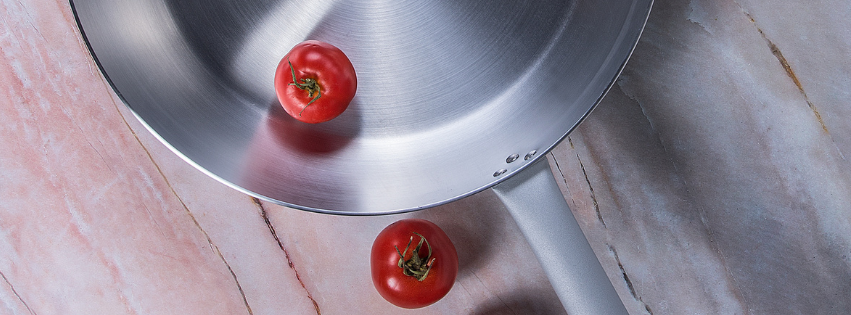
The kitchen is the heart of the home, but preparing healthy meals requires more than just great ingredients: you also need the right tools. One of the most frequent questions we receive is: "My non-stick pan has a scratch, what should I do? Can I keep cooking with it or should I throw it away?" In this article, we’ll clear things up once and for all, with the help of Annachiara's practical advice.
Annachiara's Video Tip
Before diving in, watch this short video where Annachiara shows us how to distinguish a harmless scratch from one that requires immediate replacement of the pan.
Surface Scratch vs. Deep Scratch:
The Golden rule As Annachiara explains in the video, not all scratches are the same. Here is how to evaluate them:
1) Is the scratch only on the surface?
If you notice small, thin marks, almost invisible except against the light, that haven't removed the coating layer, the pan can still be used. In this case, the non-stick property might be slightly diminished in that spot, but there is no immediate health risk. Tip: Use only wooden or silicone utensils and hand wash the pan to avoid making it worse.
2) Is the scratch deep and the metal visible?
Here the situation changes drastically. If the scratch is deep, the coating "pops off," and the underlying metal (usually aluminum) is visible, the pan must be replaced immediately.
Why is a badly scratched pan dangerous?
Many think the only problem is food sticking, but there’s more. When the coating is damaged:
- Food contamination: Particles from the lifted coating could flake off during cooking and end up directly in your meals.
- Metal release: If the coating is no longer intact, the food comes into direct contact with the pan's body. If the underlying aluminum is not treated for direct contact, unwanted substances can migrate into the food, especially with acidic foods like tomatoes.
- Compromised hygiene: Food residue and bacteria can hide in deep scratches, making them difficult to remove with normal washing.
How to make your Mamù pans last longer?
To avoid having to throw away your favorite pans, remember these 3 golden rules:
- Never use metal utensils: Forks and knives are the number one enemies of non-stick surfaces.
- No thermal shock: Do not put a piping hot pan under cold water.
- Delicate washing: Even if some pans say they are dishwasher safe, hand washing with a soft sponge is the secret to keeping them shiny and intact for years.
Did your pan pass the "scratch test," or is it time to renew your kitchen?
If you have doubts, it’s better to choose safety. Discover our line of cookware with ultra-resistant and certified coatings for healthy, worry-free cooking.


